
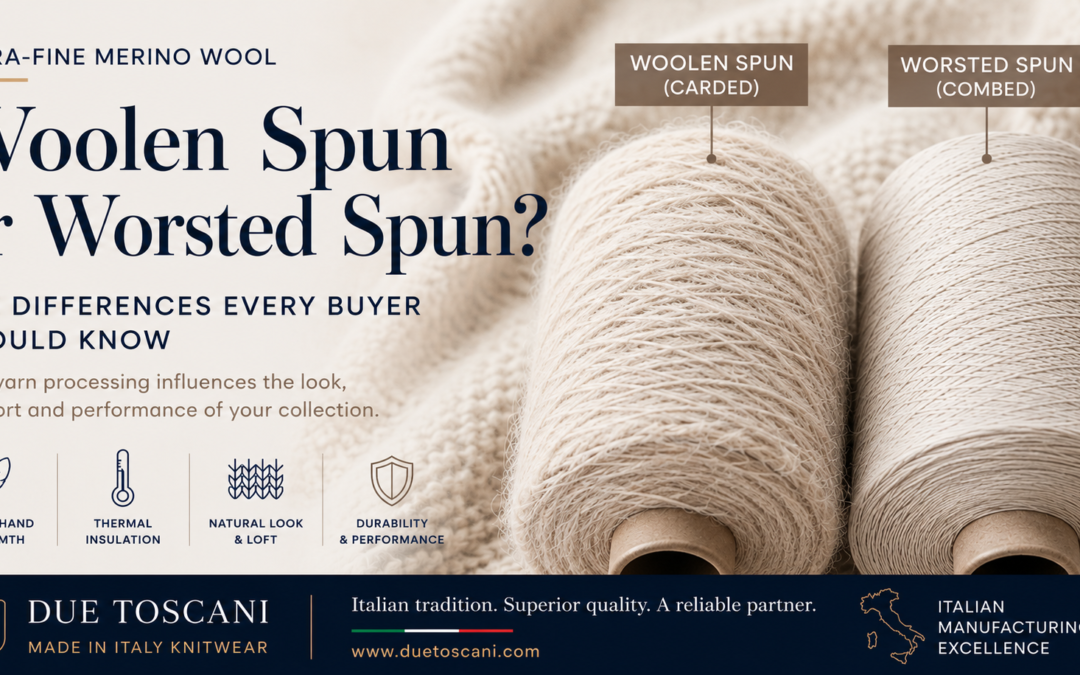
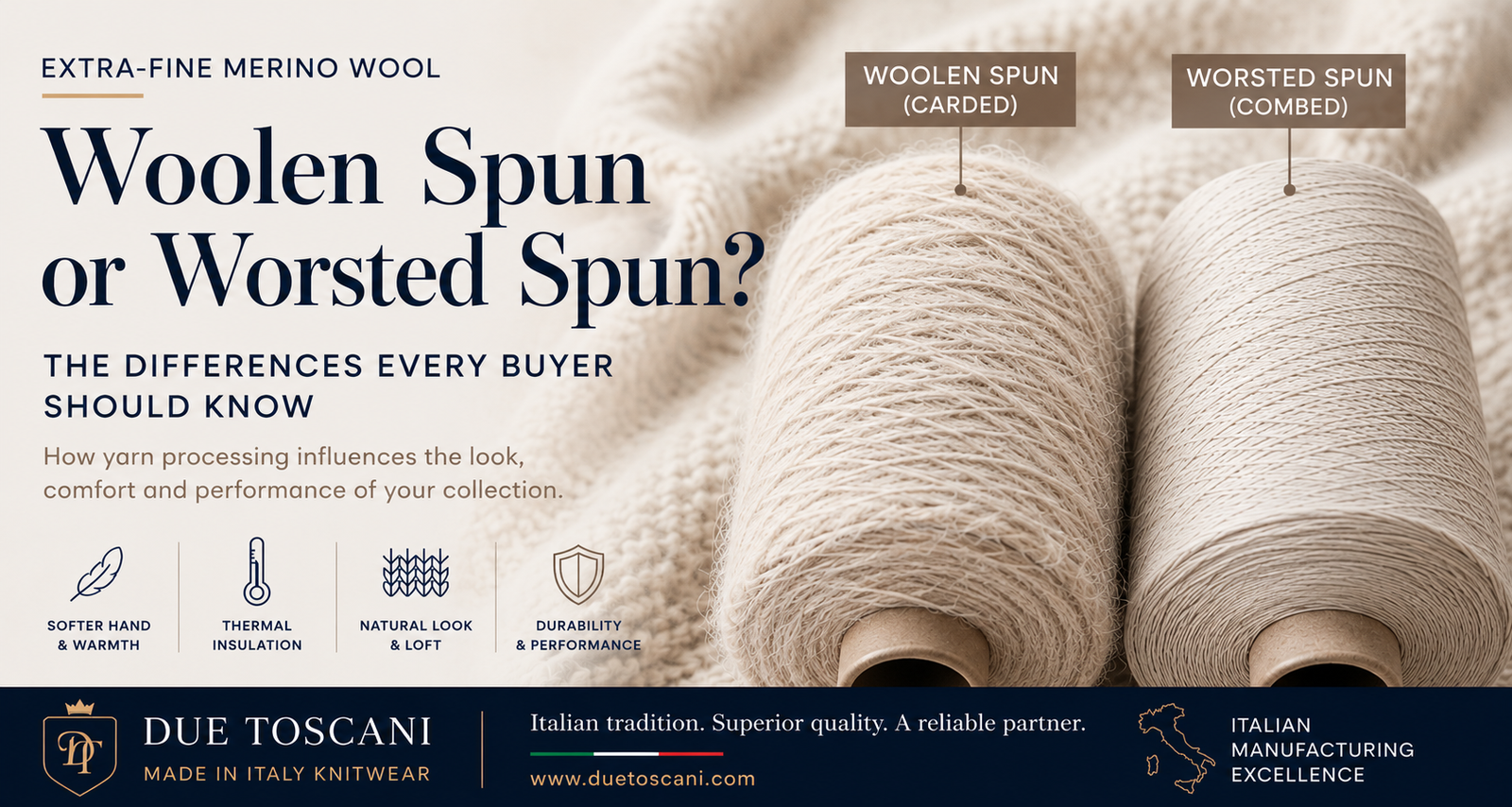
When it comes to premium knitwear, extra-fine Merino wool is one of the most appreciated fibres in the world. Soft, breathable, naturally elastic and incredibly versatile, it is used to create garments ranging from premium everyday knitwear to luxury fashion collections.
However, there is one essential distinction that is often overlooked: not all Merino yarns are the same.
One of the most important differences lies in the spinning process, which produces either woolen spun yarns or worsted spun yarns.
Understanding this difference helps designers, buyers and fashion brands choose the most suitable yarn for their collections, influencing the appearance, comfort, performance and commercial positioning of the final garment.
What is Extra-Fine Merino?
Extra-fine Merino wool comes from carefully selected Merino sheep known for producing exceptionally fine fibres.
The finest qualities measure below 19 microns, making them extremely soft against the skin and comfortable even for people who usually find wool itchy.
Thanks to its natural properties, extra-fine Merino offers:
- excellent thermal insulation;
- outstanding breathability;
- natural moisture management;
- excellent elasticity;
- exceptional comfort throughout the year.
But fibre quality is only the starting point.
The way these fibres are processed into yarn dramatically changes the characteristics of the finished garment.
What is Woolen Spun Merino?
Woolen spinning is the traditional method of producing soft, lofty yarns.
During this process, the fibres are opened, cleaned and blended, but they remain arranged in a relatively random orientation.
Shorter fibres are intentionally retained within the yarn, creating a structure that traps more air.
The result is a yarn with distinctive characteristics:
- softer hand feel;
- greater loft;
- fuller appearance;
- slightly fuzzy surface;
- superior warmth.
Because woolen spun yarn contains more air between the fibres, it provides excellent thermal insulation while remaining surprisingly lightweight.
This is why woolen spun Merino is particularly appreciated for Autumn/Winter collections.
The Visual Characteristics of Woolen Spun Knitwear
Garments knitted with woolen spun yarn typically feature:
- a softer appearance;
- a naturally fuzzy surface;
- a warm, comfortable look;
- rich texture and depth.
These qualities are especially appreciated in collections designed to communicate comfort, authenticity and timeless elegance.
What is Worsted Spun Merino?
After the initial preparation, fibres intended for worsted spinning undergo an additional combing process.
This removes most of the shorter fibres while aligning the longer fibres in the same direction.
The result is an extremely regular fibre ribbon from which a smoother and more compact yarn is produced.
Compared with woolen spun yarn, worsted spun yarn offers:
- greater compactness;
- smoother surface;
- exceptional uniformity;
- sharper stitch definition;
- increased durability.
Visually, it creates a cleaner and more refined fabric.
The Appearance of Worsted Knitwear
Knitwear produced from worsted spun yarn generally features:
- clearly defined stitches;
- smooth surface;
- minimal fuzziness;
- elegant appearance;
- excellent drape.
These characteristics make worsted Merino particularly popular in modern, minimalist collections.
Woolen or Worsted: Which One Should You Choose?
There is no universally better choice.
The right yarn depends entirely on the desired result.
Woolen spun Merino is ideal when looking for:
- maximum softness;
- superior warmth;
- a fuller hand;
- a classic, natural appearance.
Worsted spun Merino is preferable when seeking:
- a cleaner look;
- lighter garments;
- refined elegance;
- perfectly defined knit structures.
Both yarn types can be produced from premium-quality extra-fine Merino.
The difference lies not in the quality of the wool itself, but in the way the fibres are processed and in the performance and aesthetics of the finished garment.
Knitting Gauge Makes a Difference
The knitting machine gauge also plays an important role in determining the final result.
At Due Toscani we manufacture garments using both woolen and worsted extra-fine Merino.
Woolen Spun Extra-Fine Merino
Typically knitted on:
- Gauge 5
- Gauge 7
- Gauge 12
These gauges create softer, warmer and fuller garments that are ideal for sweaters, cardigans, turtlenecks and premium casual knitwear.
Worsted Spun Extra-Fine Merino
Typically knitted on:
- Gauge 18
Gauge 18 produces lightweight, elegant garments with exceptional stitch definition.
It is particularly suitable for:
- lightweight crew neck sweaters;
- knitted polo shirts;
- mock necks and turtlenecks;
- fine cardigans;
- year-round knitwear collections.
Choosing the Right Yarn for Your Market
The target market should always influence the yarn selection.
Luxury boutiques often appreciate the warm, authentic character of woolen spun Merino.
Contemporary fashion brands, on the other hand, frequently prefer worsted yarns because of their cleaner appearance and modern elegance.
Before developing a new knitwear collection, it is therefore important to consider:
- your target customer;
- desired retail price;
- garment weight;
- seasonality;
- brand positioning.
Choosing the right yarn at the beginning of the project often makes the difference between a good garment and an exceptional one.
The Due Toscani Approach
At Due Toscani, we work closely with every customer to identify the most suitable yarn for each project.
We manufacture premium Made in Italy knitwear using both woolen spun and worsted spun extra-fine Merino, selecting the best solution according to the desired style, fit, gauge and market positioning.
Whether you choose one of our Due Toscani collections or develop your own private label project, our goal remains the same: transforming your ideas into high-quality knitwear made with the finest Italian manufacturing expertise.